
This Week the NBA Crowns Its First Filipino Champion. Nobody's Saying It.
The game was Filipino all along. The marquee is just catching up.

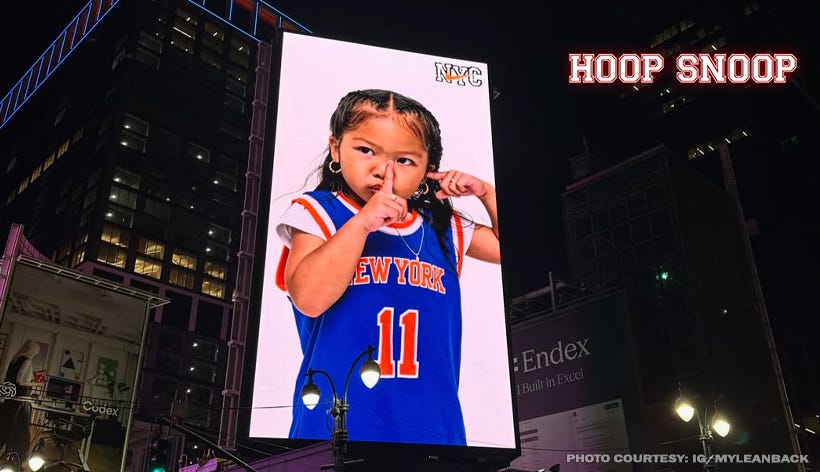
There is a three-year-old on a billboard outside Madison Square Garden, one of the busiest corners in America, and she is winning.
Her name is Rya.
She is Filipino.
She is wearing number 11, Jalen Brunson’s number, and she does his three-point celebration, the fingers under the nose, with a seriousness no adult could fake.
She went viral this season screaming his name the way other toddlers scream for ice cream.
Brunson saw it.
The Knicks brought her courtside.
And now Nike has put her face up over Midtown as part of the “Always Knicks” campaign carrying the team’s first real championship run in a generation.
The Engine Nobody Names
Let me tell you something you can only see from where I sit.
I am writing this from Thailand.
Walk through Bangkok and the people in NBA jerseys, the ones who actually know the rosters and the standings, are Filipino.
I have spent real time in Dubai.
Same thing.
Go to the pickup runs in the Gulf and the courts are full of Filipinos, and there is a whole quiet machinery underneath it, the group chats, the gym bookings, the leagues nobody covers, and Filipinos are the engine of all of it.
Dubai just built a basketball team, the first club the Middle East has ever pushed toward the EuroLeague.
And in its first season the club signed a Filipino, Thirdy Ravena, and made sure the Filipino world heard about it.
A brand new franchise in the Gulf, still figuring out who its people are, and one of its opening plays is to plant a Filipino flag.
Because they know who fills the building.
It is the same playbook in the NBA.
The Knicks have run Filipino American Heritage Nights at the Garden for years, spearheaded by NaFFAA New York, the National Federation of Filipino American Associations, alongside partners like Project Barkada, who hand out custom Knicks merch and once ran a Hoopbus through the city to the Garden with free throws at every red light.
They pack the upper bowl and turn a regular night into a takeover.
The Filipino community is one of the biggest ticket-buying blocs the Knicks have.
There is even a Filipino in the building every night, Erwin Benedict Valencia, the team’s wellness lead and the first Filipino on an NBA training staff.
Two Knicks legends, Allan Houston and John Wallace, sat down this spring and spoke about the fervor of Pinoy fans, their word, the passion they have watched from Madison Square Garden all the way to the streets of Manila.
Online it is a whole parallel country of devotion.
Marcus Chu, the Neon Man, flies around the world in neon green so his family back home can spot him courtside, and NBA teams have honored him by name.
The Filipino NBA pages light up millions of feeds.
The group chats from Bangkok to Brooklyn pass around clips of Rya and Jordan Clarkson before the American feeds even catch up.
These are the people carrying the infrastructure.
This is not a niche.
The Philippines is, by any honest measure, the most basketball-obsessed country on earth.
Home to the second-oldest professional league in the world.
More NBA fans per head than anywhere outside America.
The place that co-hosted a World Cup and set the all-time attendance record on the way, 38,115 people in one building for a single game.
And wherever Filipinos go for work, and they go everywhere, the game travels in the luggage.
Manila to Dubai to Bangkok to a billboard at 34th and 7th.
That is the part the story always misses.
The love is global, it is organized, it is decades deep, and it carried this game into rooms the league only later figured out how to sell.
They Gave It to the Girls First
Because here is the thing almost nobody putting her on that billboard knows.
A hundred and sixteen years ago, the empire handed the game to Filipino girls.
And then it took it away from them.
Basketball did not grow in the Philippines.
It was installed.
After America seized the islands in 1898, the YMCA and a wave of American schoolteachers carried the game in as part of the project.
Civilize them.
Discipline the body.
Teach them to move like us.
And when they first rolled it into the public schools around 1910, they gave it to the girls.
It was a women’s sport first.
Then the Church lost it over the bloomers the girls wore on the court, demanded skirts pulled over them, and under the shame the women’s game faded out.
The boys picked it up off the floor.
By 1913 the men were taking gold at the first Far Eastern Championship Games.
Read that slowly.
The colonizer brought a game to make a people obedient, gave it to their daughters as a lesson in posture, embarrassed the daughters off the court, and the sons turned the leftover into the deepest basketball faith on earth.
They took the thing meant to tame them and made it theirs down to the blood.
The Crown Comes Home Either Way
Which is exactly what this week is about.
These Finals will crown the first NBA champion of Filipino descent in the history of the league.
Not maybe.
Guaranteed.
Jordan Clarkson is on the Knicks.
Dylan Harper is on the Spurs.
The Knicks are up 2-0 with Game 3 at the Garden this week.
One of those two men lifts the trophy in a matter of days, and it does not matter which bench you ride with.
The crown comes home either way.
Clarkson does not play for a flag.
He plays for his lola, Marcelina.
He suited up for the Philippines when he had every reason not to, carried the national team through that World Cup at home, dropped 34 on China in a building that could not breathe.
He reached the Finals once, in 2018, and lost.
He has stood one win from the mountaintop and watched it stay out of reach.
He is one win away again.
On the other side, Harper.
Mother from Bataan.
Father, Ron Harper a five-time champion.
The kid can match his old man’s ring this week, except he would do it as the first of his blood to ever hold one.
And none of this is new. It is just finally visible.
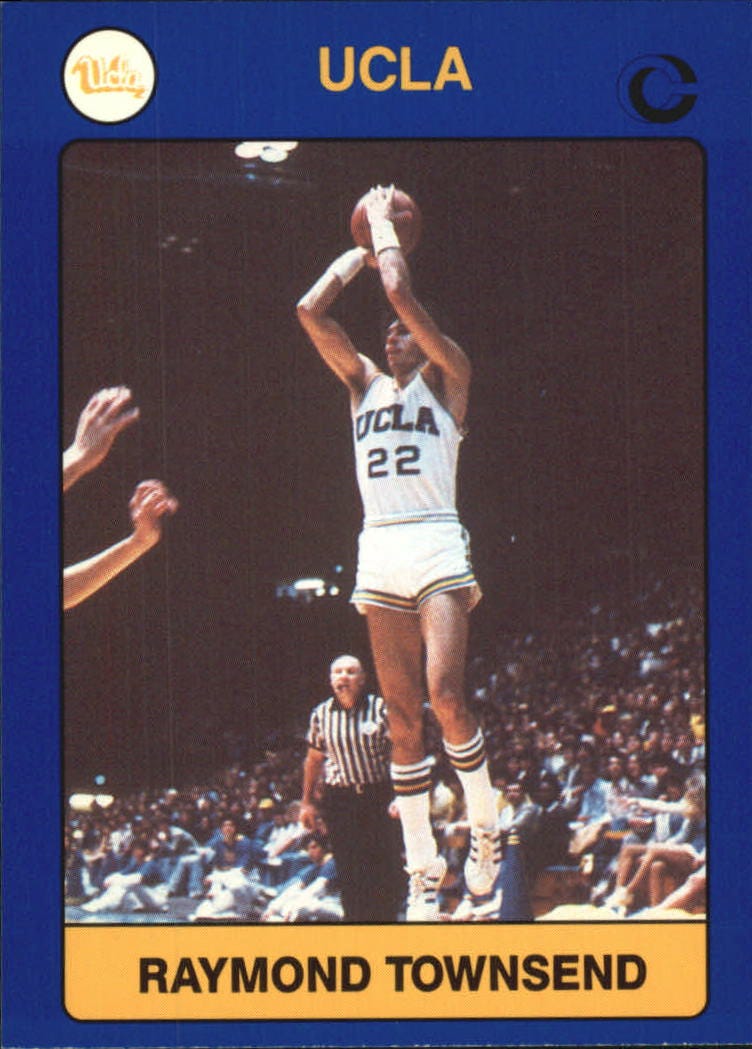
A Filipino did not step on an NBA floor until 1978.
Raymond Townsend, drafted out of my alma mater UCLA by my childhood squad, Golden State, the first one in.
He barely played.
A kid used to rebound for him at Pauley Pavilion and worshipped his jumper.
That kid was Steve Kerr, who went on to win everything as a player and a coach.
The first Filipino in the league quietly shaped the man who would hoist ring after ring, and nobody wrote it down.
Then Townsend left and the door shut for thirty-six years.
I Know This From the Inside
I know this story from the inside, and I should tell you how.
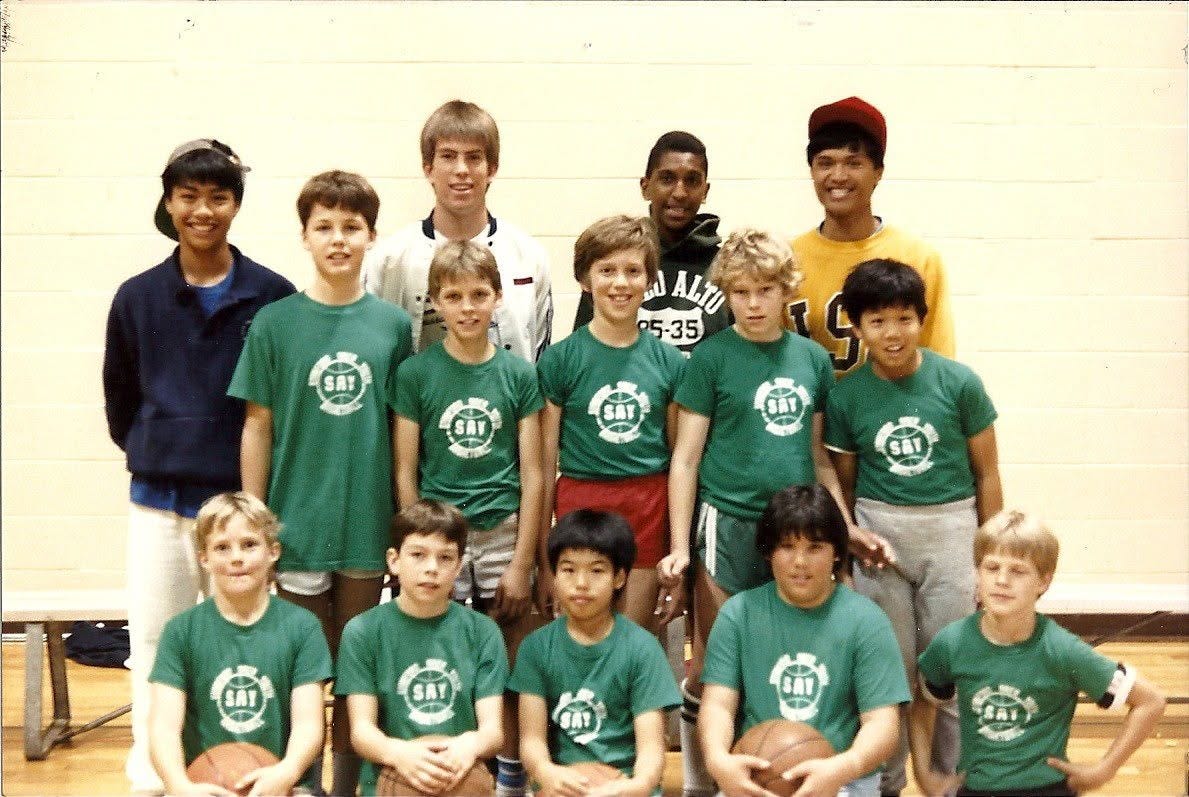
I am from the Bay Area, and I grew up around so many Filipinos I'd call myself an honorary kababayan.
I battled them in breakdancing.
I watched them outwork everybody on the turntables.
Some of the best DJs in the world are Filipino, and if you came up in the Bay you know their fingerprints are all over hip hop.
The culture has never given them the credit.
The Bay always knew.
Palo Alto, the late 1980s.
I played for Palo Alto High, a school not exactly known for basketball back then.
That would change later, when a kid named Jeremy Lin took my high school to a state title and beat powerhouse Mater Dei.
Lin went on to the Knicks, and “Linsanity” happened at the same Garden where Rya’s billboard hangs today.
My little high school, the one nobody knew for ball, keeps finding its way back to that building.
I am starting to think the Garden has been following me my whole life.
A Filipino family took me in, the Aspiras brothers, and we were a classic hoop junkie crew.
We played all over the Bay.
We drove to watch other high school games.
We ran in an AAU-style league at Stanford.
We watched every game we could get to.
We coached little kids.
And we ate hella lumpia and good Filipino food, always at the Aspiras house.
Dan was older and on the team with a kid named Jim Harbaugh before Harbaugh became Harbaugh.
Dave, was my best friend and ran the point, smooth, generous with the ball, and he and I played together on the same team.
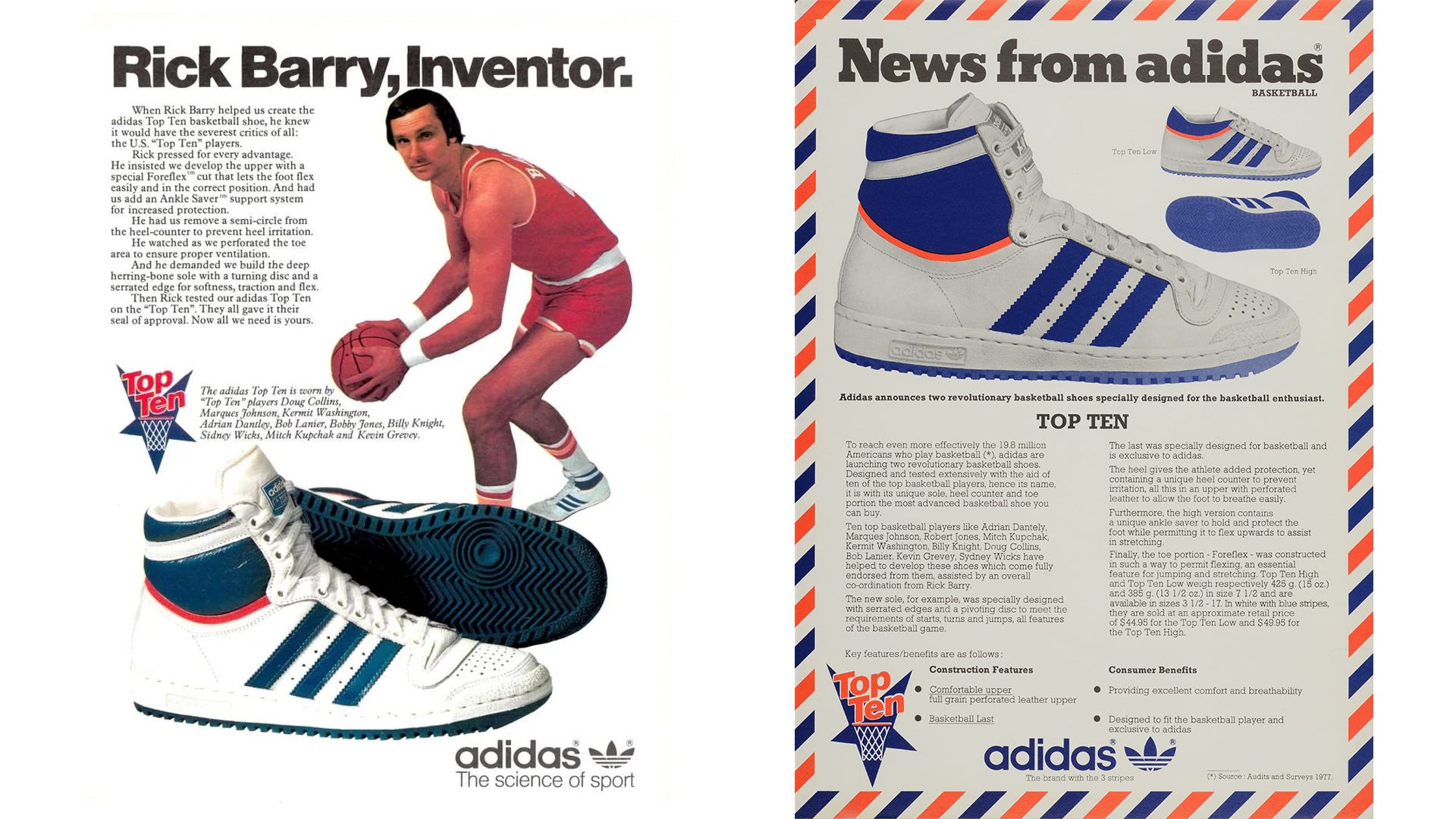
Then there was Paul.
Paul could flat out play and had a sweet hesitation move and played with that “dog” in him.
Bro was so smooth, he kept his massive collection of Adidas Top Ten sneakers in the box, stacked and pristine, like they were holy.
He had certain pairs he never wore.
Paul is the reason I got obsessed with shoes.
The shoes became an eye for culture.
The eye became a career.
The career became a life.
A Filipino family in Palo Alto handed me the thing I would spend 30 years getting paid for, and nobody ever wrote that down.
Who Won't Be in the Story
So I know what is coming when that trophy lifts.
The story America tells will be about the franchise.
The market.
The league’s beautiful global growth.
They will hand the moment to the institution, the way they always do.
Rya will not be in that story.
The schoolgirls in bloomers will not be in that story.
Townsend will not be in that story.
The Aspiras brothers will not be in that story.
Erwin Valencia, in the Knicks’ own building every night, will not be in that story.
The lola whose name is stitched into the way her grandson plays will not be in that story.
NaFFAA, Project Barkada, the Neon Man, the diaspora that fills arenas and pickup courts on three continents, none of them will be in that story.
Culture built this.
A borrowed game made into a birthright over a hundred years built this.
Filipinos built a global infrastructure of devotion.
Culture built the building. Culture is still not on the lease.
But look back up at that corner.
The girl on the billboard is the girl in the bloomers.
Same game, same blood, a hundred and sixteen years apart, finally standing in the exact place they once tried to keep her from standing.
Forty feet tall over the busiest sidewalk in the country, doing the captain’s celebration, claimed by every tita in the comments.
The game came home this week.
And some of us know whose home it was all along.