
The Ones Behind The Ones
On Missed Deals, Generational Wealth, And The People Who Make The Difference

Earlier this week I wrote about the OpenAI cap table.
About the people who built the bridge between culture and tech and didn’t get credit for it. About operators who took decades of cultural fluency and turned it into real venture math. About the ones history forgot who were building infrastructure before the industry had a name for what they were doing.
That post was about attribution. This one is about something harder.
Because the other side of that story the part nobody wants to say out loud is this: sometimes we had the allocation. Sometimes the door was wide open, the deal was real, the numbers were right there, and we still walked away. Not because we were locked out. Not because we weren’t in the room. Because the people we trusted to help us decide didn’t know how to read what they were looking at. And sometimes, if I’m being completely honest, we didn’t either.
I’ve had the allocation more than once. Liquid Death is one I’ll name (thank you again Peter Pham) There are others I won’t, because the people involved are still my people. But the pattern is always the same.
I bring it. I explain it. I connect the dots between what this company is doing and where culture is going. I can see it, I’ve been seeing things like this my whole career. Pattern recognition is basically my job.
And then I watch them pass.
Not because they’re dumb. Not because they don’t have the money. Because they ask a lot of questions just not the right ones. Or they defer. They hand it off to a business manager who hands it off to an accountant who hands it off to a lawyer who has never once in his life thought about where culture and capital meet. And by the time that chain runs its course, the deal is closed, the window is gone, and three years later everybody’s talking about how big it got.
Let me be clear about something. This is not just a story about other people making mistakes. I’ve been standing in my own doorway too. There have been real moments where I had something in front of me and the voice in my head started doing exactly what that business manager does. Started asking the wrong questions. Started calculating risk instead of reading the room. Started sounding reasonable when reasonable was precisely the wrong thing to be.
What does that voice sound like? It sounds like patience. It sounds like prudence. It says let’s wait and see how this develops. It says “I’m not sure I understand the business model yet.” It says let me run this by someone. And every one of those sentences is a way of saying no without having to feel like you said no.
I’ve had to train myself to recognize that voice. To ask: am I being smart right now, or am I being slow? Because in this game, slow and smart can look identical until suddenly they don’t.
That took me years. Some people never figure it out.
Kevin Hart never figured it out on Uber. Troy Carter brought him the deal early. The ask was somewhere between $50,000 and $75,000. Hart’s response, in his own words: “Sounds like murderville to me.” He passed. That $75,000 would have been worth over $100 million. “To this day I think about it,” he said.
I’m not telling that story to embarrass Kevin Hart. He told it himself, publicly, because it’s the kind of story that needs to be told. What I want you to notice is something else. Troy Carter did his job. He saw it, brought it, made the case. The decision still went the wrong way because the voice Kevin listened to that day wasn’t Troy’s.
That gap between the person who sees the deal and the person who makes the call is where fortunes get lost. And it’s been swallowing our people whole for decades. The wealth is there. The proximity to deals is there. The relationships are there. What keeps going missing is the right person in the right ear at the right moment.
That person has a specific profile. They grew up inside culture. They understand the language of the streets and the language of a term sheet. They’ve spent decades building trust on both sides of the room without ever needing to announce it. They don’t ask the right questions because they read about the deal in a newsletter. They ask the right questions because they’ve lived close enough to the moment to recognize it before it has a name.
The artists, athletes, and executives who have made the best moves not just in music and sports but into technology, into ownership, into the kind of wealth that compounds across generations almost always had someone like this in their corner. Not a traditional manager. Not a business manager. Something older and more specific. A connector. A cultural advisor. A whisper.
These are the ones behind the ones.
I’m not writing about them from a distance. I have sat in their offices, broken bread with them, watched them work up close across thirty years in this industry. Some of them helped shape how I move. All of them represent what the right advisory infrastructure actually looks like built from inside culture, not parachuted in from outside it.
Here are the ones I know.
The Ones I Know
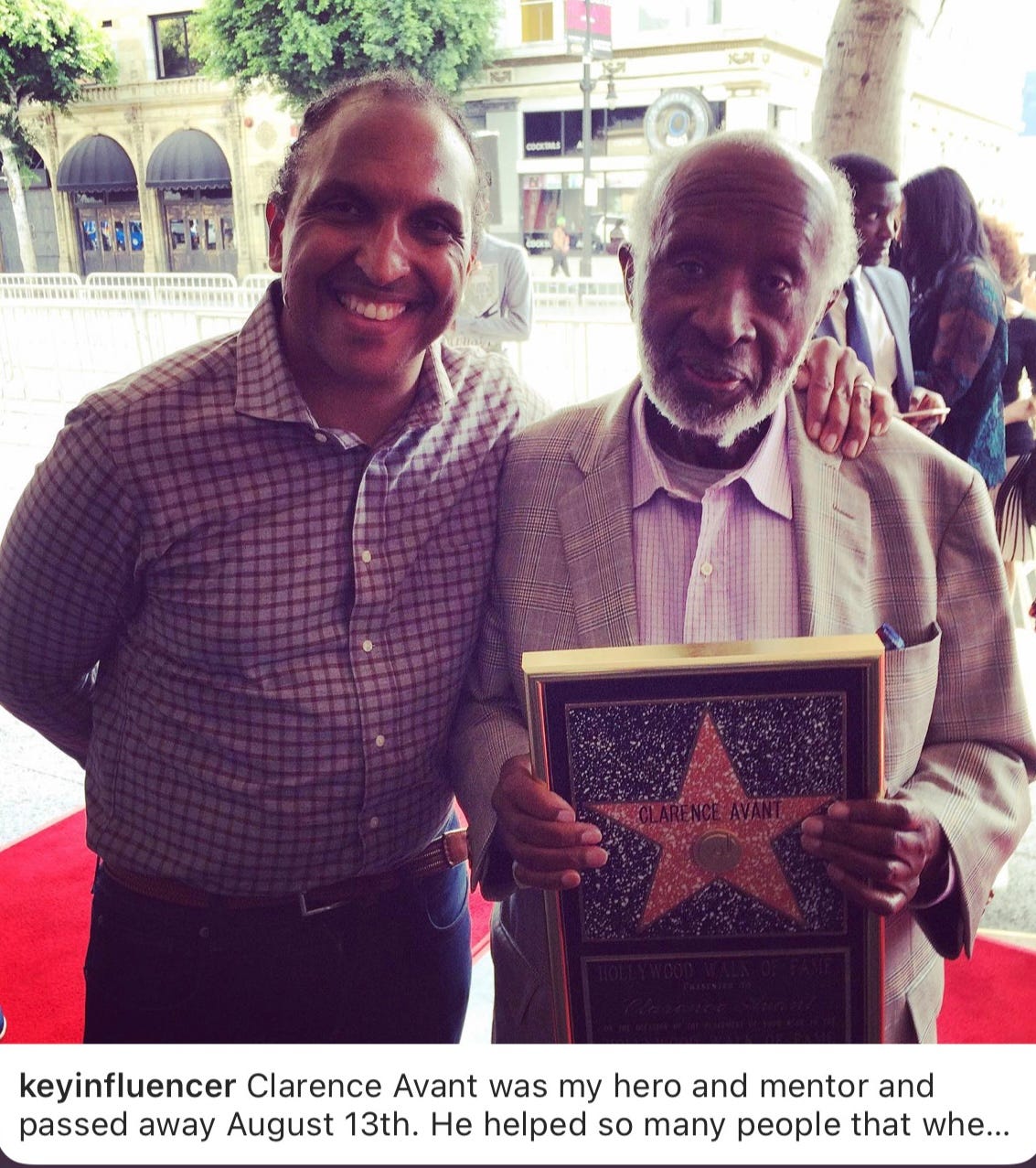
1. Clarence Avant
The Black Godfather. The original. He was chairman of Urban Box Office when I was there in the late 90s, and I was getting the good game on a regular from a man who had been doing this since before most of us were born. Clarence kept his mouth shut about what he knew and asked for as much money as possible without mumbling his words. He spoke uptown and downtown -- Harvard Club to Harlem -- without changing his voice or his shoes. He delivered massive results without any noise. When Diddy shouted him out at a party, Clarence pulled him aside. “I’m Clarence Avant, son. I don’t do shout-outs.” That’s the whole philosophy in one sentence. Proximity to elders collapses learning curves. I’ve been trying to live that ever since.
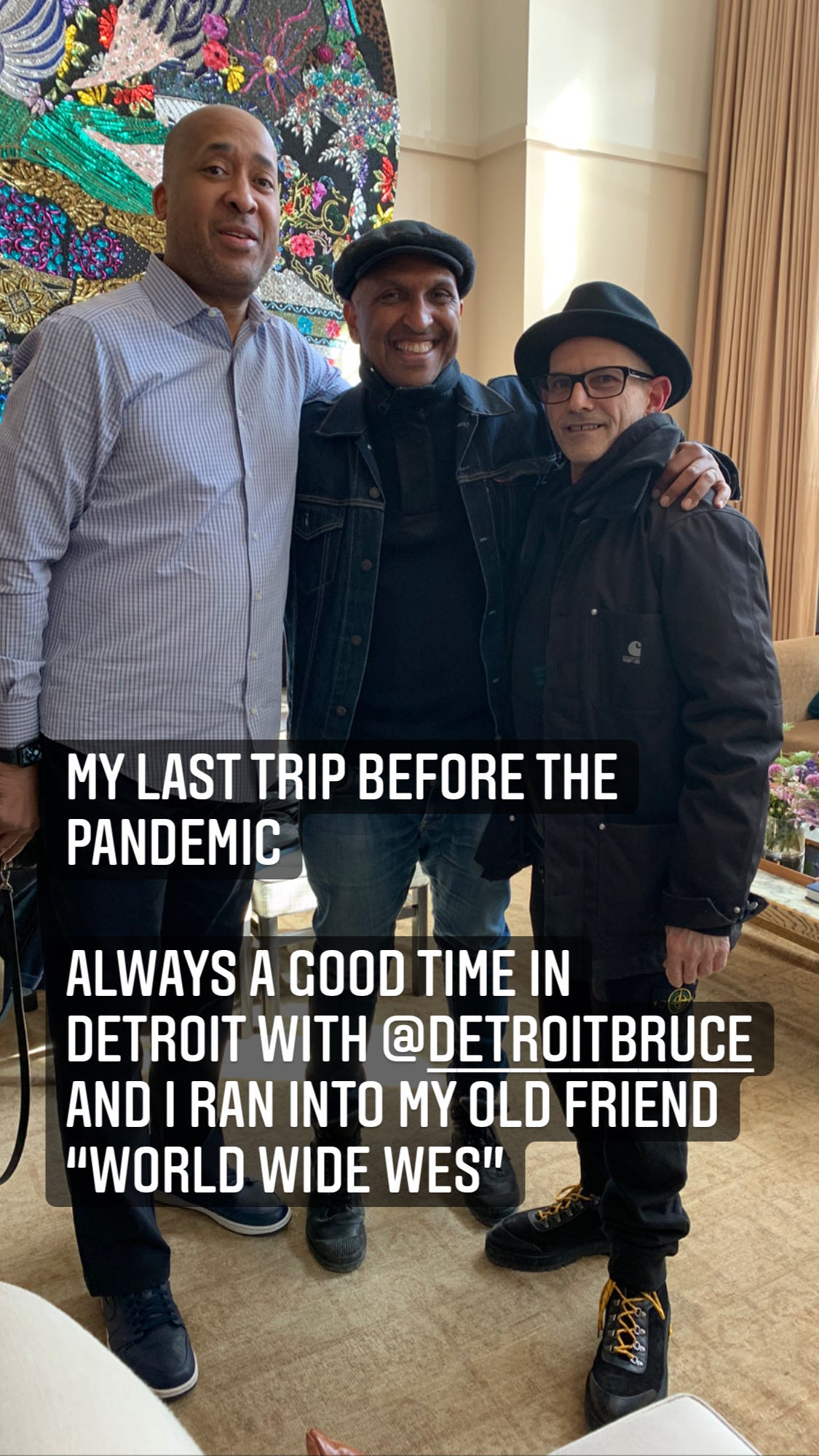
2. William “Worldwide Wes” Wesley
I’ve known William “Worldwide Wes” Wesley for over twenty years, since my Columbia Records days when I was trying to get Michael Jordan to listen to advance albums from artists nobody had heard of yet. I would send him CD’s of these groups called the Fugees, Destiny’s Child, Kenny Lattimore in hopes MJ would just take a listen. Wes was already in every room that mattered. What makes him extraordinary isn’t the access. It’s the trust he built to get that access, quietly, over decades, without ever needing a headline to validate it. Jay-Z put him in a song for a reason: "Shoutout to Worldwide Wes, everywhere we go we leave a worldwide mess." That line wasn't flattery. It was documentation. Wes’s network runs from Presidents of the United States to Jay-Z to NBA front offices not because he chased proximity but because he earned it. Jalen Rose coined the nickname “Worldwide Wes” because Wes was always everywhere, not for himself, but for whoever needed him in that room. He’s now EVP / Senior Advisor to the New York Knicks. The game always finds a way to bring the right people back to the right places. I'll keep it simple: Wes has made things happen for me more times than I can count, and he's never once asked for anything in return. That's the man.
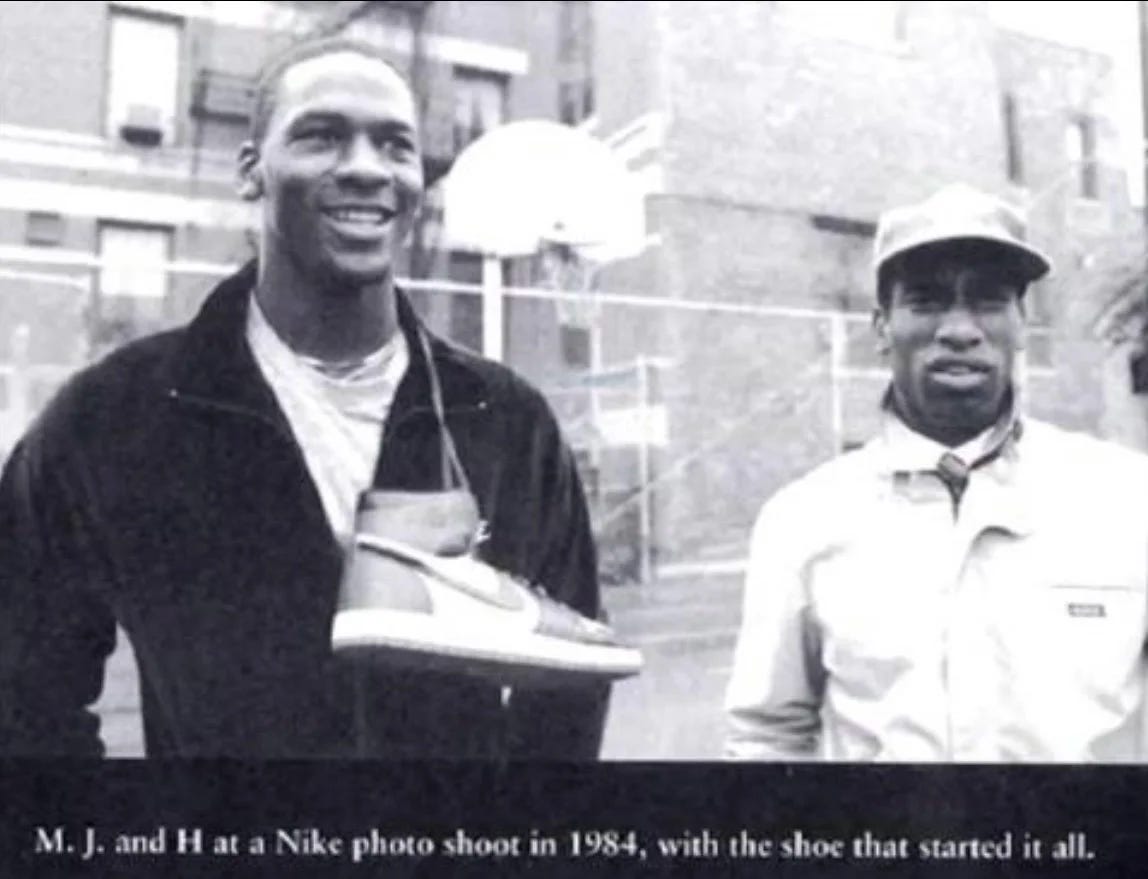
3. Howard “H” White
H. White built the Jordan Brand from the inside at Nike over 45 years and is currently VP of Jordan Brand Affairs. He signed Michael Jordan when Jordan wanted to go to Adidas not by leading with money but by building a bond with MJ’s parents first, letting that relationship become the foundation of everything that followed. When Nike considered shutting down Jordan Brand after the ‘93 retirement, “H” went to Phil Knight with the Mercedes-Benz analogy: a dead founder’s brand still accelerating off the line, because the symbol outlasts the person. That reframe saved and expanded one of the most valuable brands in sports history. Jordan said it plainly: “I don’t do much without at least talking to Howard White.” Deion Sanders added: “H is the glue that keeps players at Nike.” Every time I came to Beaverton to work with Nike as a client, I made sure I had time on H’s calendar. Those conversations shaped how I think about relationships and long games in ways I’m still drawing on today. You don’t get that kind of education anywhere else.
4. Estee Portnoy
You cannot tell the story of what Michael Jordan became off the court without telling Estee Portnoy’s story, and most people never do. She has been running Jordan’s business life for over 25 years the endorsements, the ventures, the brand partnerships, the philanthropic architecture, all of it. Jordan described her role himself: “Estee handles my day-to-day marketing and business matters. She is responsible for managing my schedule, executing my corporate contracts, reviewing all marketing proposals, and for making sure that the use of my name and image is consistent with my wishes.” He told her early: “I don’t pay you to be nice.” She took that seriously and built Jordan Inc. quietly, meticulously, for a quarter century. The Jordan Brand at its current scale doesn’t exist without her. Most profiles of Jordan don’t mention her name once. That’s not an accident. That’s what the job requires -- and she’s been doing it at the highest level longer than most people have been paying attention.
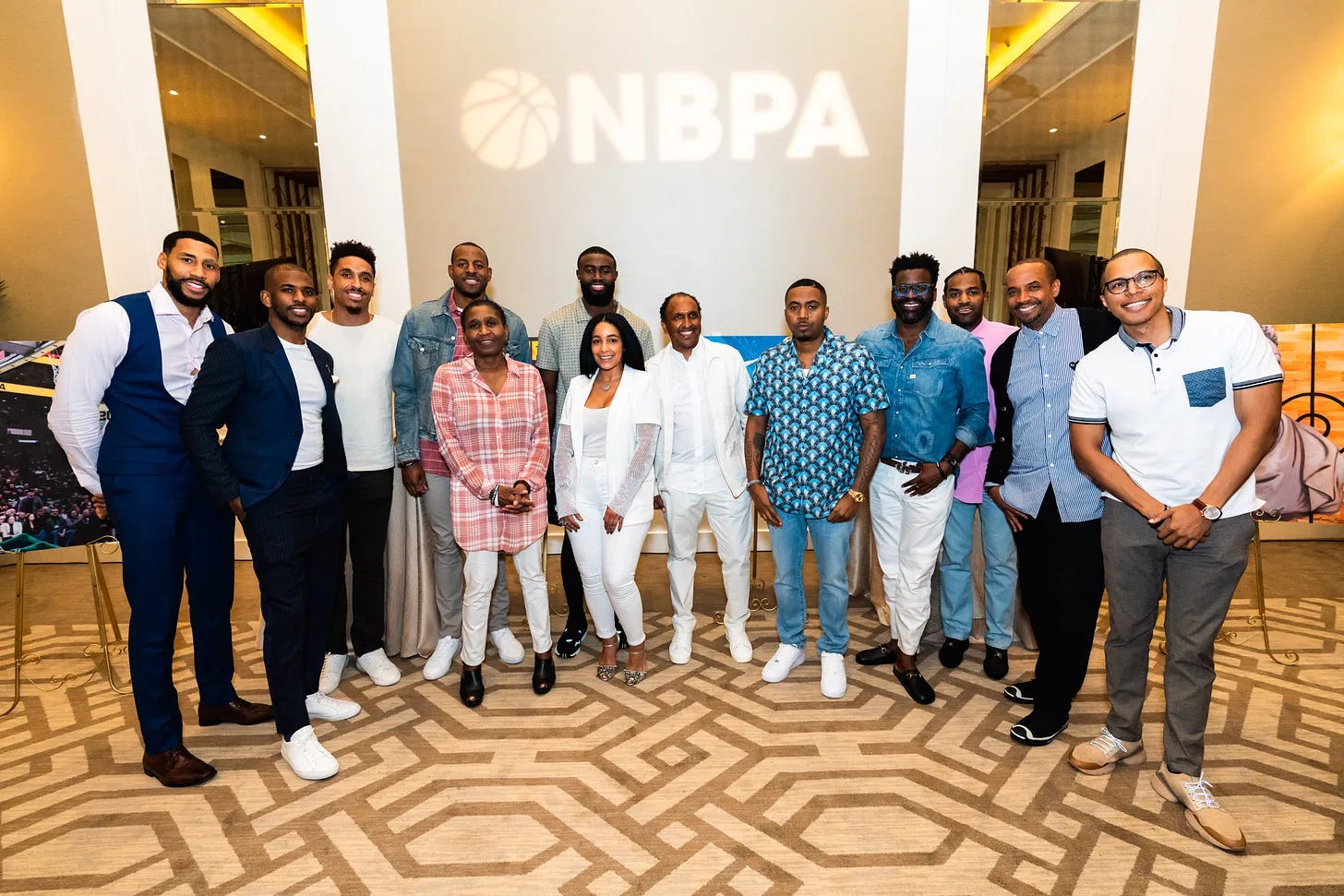
5. Que Gaskins
Que and I go back to my days as CMO at Ecko Unlimited in the 90s, when I was in conversations with Allen Iverson about fashion and Que was already seeing the cultural codes that Reebok’s own executives were slow to read. He pushed hard for the 10-year, $50 million Iverson deal when the CEO wasn’t convinced. He helped design the Answer line and built a cultural translator role between Iverson’s raw authenticity and a brand that needed someone to explain to them what they actually had. Iverson named him in his Hall of Fame speech. Later, when Que was at THINK450, the NBA Players Association’s marketing and innovation arm we worked together on something I’m proud of: we brought Nas, Henri Pierre-Jacques, Monique Idlett, Eric Moore, and others to the Bahamas to have real conversations with current and retired NBA players about alternative investments. Que called it “world building in the most powerful way.” He was right. He has always seen what’s coming before the institution is ready to look up.
6. Constance Schwartz-Morini
Constance co-founded SMAC Entertainment with Michael Strahan in 2011, after nearly a decade managing Snoop Dogg and before that a decade inside the NFL. She runs a talent management firm that also functions as a business incubator and Emmy-nominated production company. She was the one who encouraged Deion Sanders to take the head coaching role when nobody else believed he could make that transition. Strahan has said her ability to spot lasting potential is “unbelievable a gift I’ve never seen anyone have.” Her company motto, which she holds everyone to: “Hustle like you’re broke.” When Snoop’s team stopped listening to her counsel, she told them directly: “If you don’t want to hear what we have to say, we can leave and go back to our office and work with people who do.” Two days later Snoop hired her as his manager. I’ve spent time with Constance over the years. She is exactly who she appears to be….clear, decisive, and always building ten steps ahead of where the conversation is.
7. James Lassiter
James Lassiter aka “JL” has been Will Smith’s pragmatist since the beginning, I was introduced through DJ Jazzy Jeff, who is family to me, which means I’ve watched this partnership up close for decades. Lassiter co-founded Overbrook Entertainment and has been the steady hand behind some of Smith’s most consequential creative decisions. Smith has said publicly he didn’t want to make The Pursuit of Happyness. Didn’t want to make Ali. Lassiter just had an eye. He describes their dynamic plainly: “I look at Will as the dreamer and I’m more the pragmatist. I think our partnership works well because I’m able to corral the dreams and focus them.” No limelight. All execution. Without the pragmatist, the dream stays a dream and the dreamer stays broke.
8. Leland “Pookey” Wigington
Pookey and I go back to 1992, when he helped me produce B-Ball’s Best Kept Secret -the first NBA/hip-hop crossover album, featuring Shaq, Jason Kidd, and Warren G, before anyone was putting those two worlds together commercially. We were also both shaped by Coach Philip Mathews at Ventura College, an incredible man who left his mark on both of us. Pookey spotted Kevin Hart before Kevin Hart was Kevin Hart, a raw club comedian most people walked past without a second look. He signed him, co-founded HartBeat Productions in 2009, and built the business infrastructure around one of the most successful entertainment empires of the last two decades. There is no Kevin Hart without Pookey Wigington. And Pookey is exactly the kind of person who never appears in the business profiles, which tells you everything about his priorities and nothing about his impact.
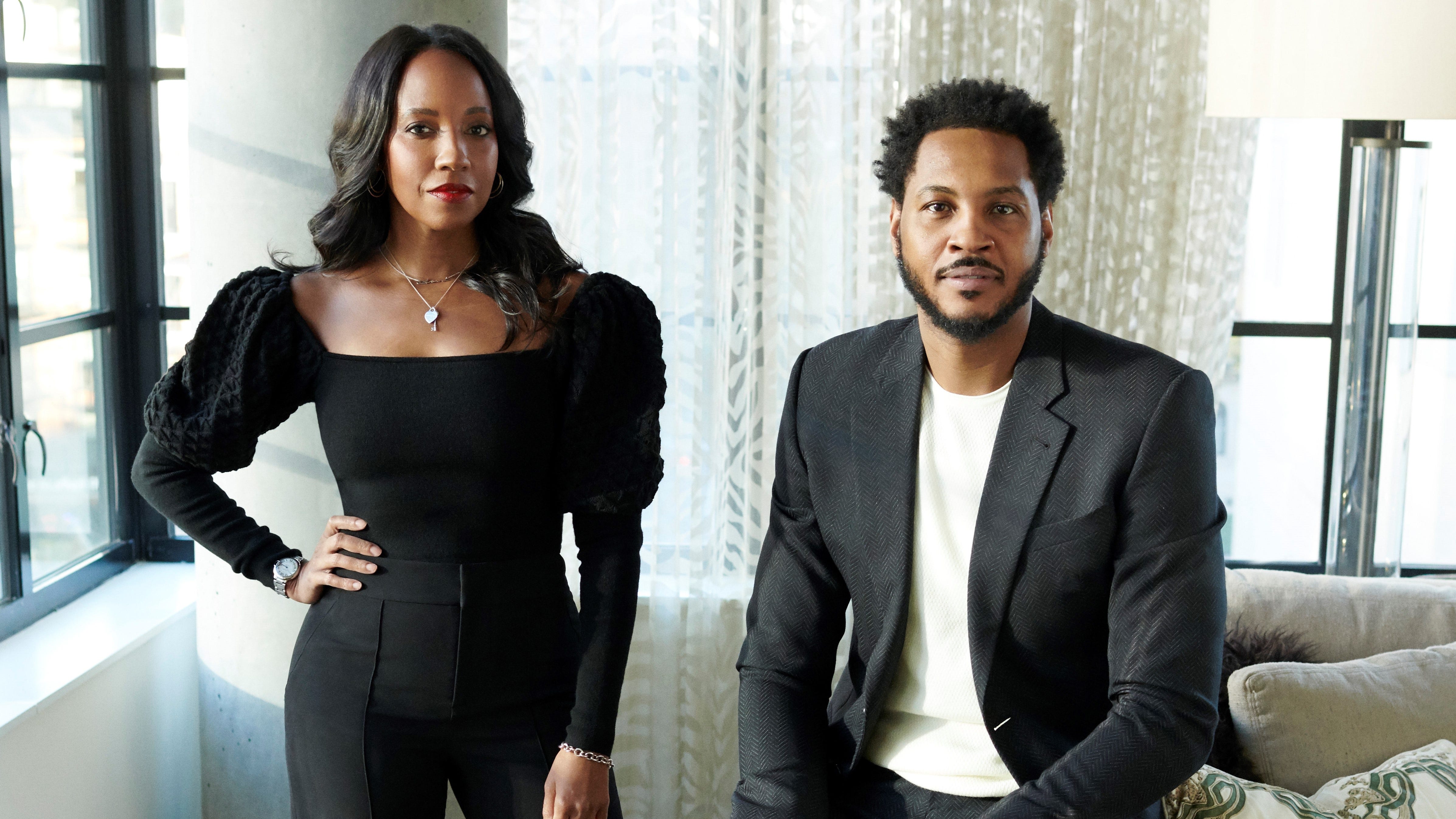
9. Asani Swann
Asani and I are both from San Jose, California, which matters because San Jose doesn’t produce many of us who end up where we ended up, and the ones who do tend to recognize each other across a room. She started as Carmelo Anthony’s assistant at Melo Enterprises what she has called “six very long months” that humbled her and sharpened her and built from that into one of the most complete operators and strategists in the business. She is co-founder of Creative 7, their global multi-platform content company, PlayMakeHer (read more below), and the wine label VII(N) The Seventh Estate in partnership with Robert Mondavi Winery a venture she has used deliberately to expand diverse ownership in an industry that has historically kept those doors closed. Carmelo has called her his right hand publicly and consistently because that’s exactly what she is: the person who built the operational and strategic architecture that turned his post-playing vision into a sustainable empire of content, philanthropy, and brand. She did all of it while remaining one of the most generous connectors in the business the kind of person who creates tables and then pulls up chairs for other people. Her name belongs in every room it enters.
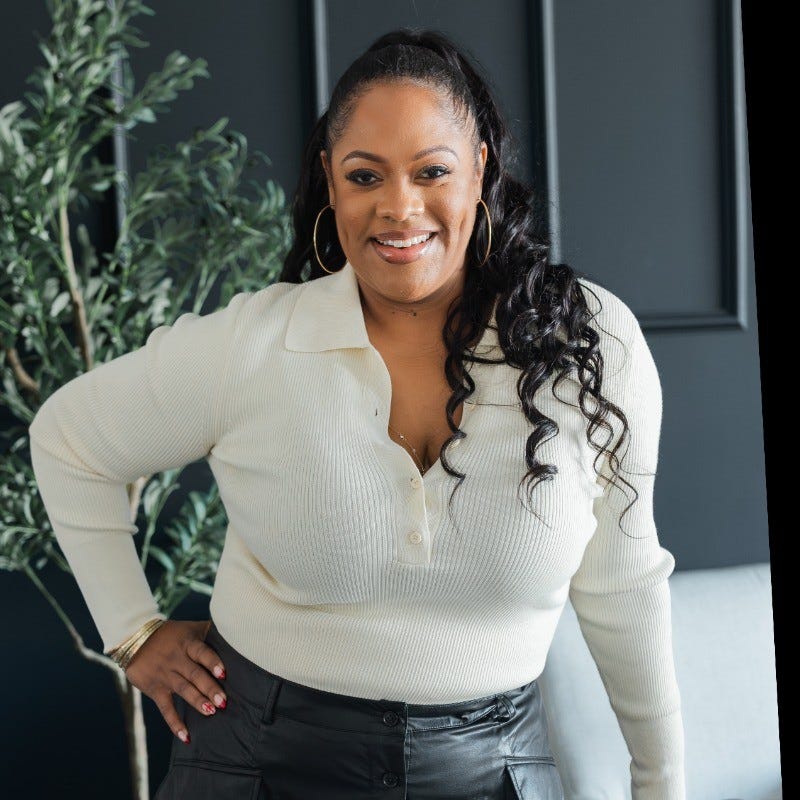
10. Lisa Joseph Metelus
I’ve known Lisa since the mid 90’s when she was in her hometown of Miami working with Alonzo Mourning and running Zo’s Summer Groove one of the most impeccably executed community events the NBA world ever produced. That same precision and relationship-first approach carried her into a three-decade career that makes her one of the most powerful sports executives operating right now. She is a CAA Board member, Co-Head of Basketball, and Head of Athlete Brand Strategy and Entertainment overseeing the off-court branding, media, entertainment, and business development for more than four dozen NBA All-Stars and rising stars. She doesn’t just advise athletes. She builds the infrastructure that lets them own their own narrative turning platforms into direct connections, relationships into ownership, and careers into legacies. She helped Dwyane Wade build everything from Wade Cellars to iHeartMedia podcast The Why to Broadway producing credits. Her promotion to the CAA board as the only Black woman at the time wasn’t symbolic. It was recognition that she runs a significant, high-impact piece of one of the most powerful agencies in the world. On getting credit in a space that rarely gives it, she said exactly what she knew to be true: “As women we aren’t usually the ones that get credit for a lot, especially being in such a male dominated space. This moment is definitely not about me. It’s really about us being in that room together.” Lisa doesn’t support stars. She builds the infrastructure that makes them inevitable.
11. Carmen Green-Wilson
Carmen serves as chief of staff and business development lead for Chris Paul’s CP3 LLC, and her scope is everything. Multi-million-dollar HBCU education initiatives. Full-ride endowments. Paul’s snack brand Good Eat’n. His production company. His foundation. His entire day-to-day. Chris has described her simply as the person who “knows everything about everything with regards to the projects I manage” which is another way of saying she is the reason any of it actually works. In a world that celebrates the visionary, Carmen is the one who makes the vision land executed with precision, scaled with intention, and sustained over years without ever once needing the spotlight. That kind of operator is rarer than any title suggests. Carmen is generous and kind, grateful to call her friend.
12. Shannon McGauley Daniel
Shannon has been Kevin Love’s business manager for well over a decade handling the full portfolio, the endorsements, the Kevin Love Fund mental health work, and the architecture of what comes next for one of the more thoughtful post-career transitions in recent NBA history. During the pandemic she and her partner bought a building in Foxburg, Pennsylvania a tiny historic town nobody was paying attention to. Then another building. Then another. What started as a personal escape became a half-million-dollar commitment to reviving a community most people had written off entirely. That instinct to see value where others see vacancy, to move before the moment becomes obvious to everyone else is exactly what makes her irreplaceable in the sports world too. Shannon doesn’t wait for permission to build. She’s always been this way, I have had the pleasure of being in her orbit for 20 years back when she was at TNT Sports.
If You See The Men, You See Our Work
These four women, Asani, Lisa, Carmen, and Shannon built something together that deserves its own mention. In 2018 they co-founded PlayMakeHer, a professional community for women in sports and entertainment. The table they wished had existed, paid forward to the next generation. As Asani put it: “There’s really nowhere for women in sports to congregate and network, why not create it?”
In 2016, when Carmelo, Chris Paul, Dwyane Wade, and LeBron delivered that social justice speech at the ESPYs the moment that shifted what athletes could say from a public stage Asani, Lisa, and Carmen were on the group call that built the framework. They made it possible.
Asani said what needed to be said: “If you see the men, you see our work.”
The quiet architects are often women. The invisible labor is often theirs. That is not a footnote to this story. That is the center of it.
The Missing Layer
Some of these twelve have built funds and made it onto cap tables in their own right. Some structured the deals that put their clients there. What they share is harder to title than a fund and more valuable than a line on a term sheet -- the ability to see around corners on behalf of someone else. To say yes before yes feels safe. To tell the truth before the window closes.
That is exactly what’s missing from the broken advisory layer I described at the top. The business manager built to protect, not to move. The accountant built to preserve, not to compound. The lawyer built to mitigate risk, not to recognize a moment. Honorable functions. Just not enough. And confusing them for strategy is costing us generational wealth in real time.
The deals get missed when this archetype is absent. The deals get made when it’s present. That’s been the whole story for as long as I’ve been in this industry.
The wealth is there. The proximity is there. The relationships are there. What’s missing is a Clarence. A Wes. An H. An Estee. A Que. A Constance. A James Lassiter. A Pookey. An Asani. A Lisa. A Carmen. A Shannon.
Someone who has seen enough, knows enough, and cares enough not about their own position but about yours to tell you the truth before the window closes. Someone who doesn’t do shout-outs. Someone who just delivers.
If the person you trust with your money and your name has never moved first on anything, never said yes when yes felt risky, never been willing to be wrong in the direction of bold then you already know what happens the next time the door opens.
That receipt exists. The one that shows all the times the door was open and we let it close. The one nobody posts a reel about.
The next one doesn’t have to end the same way. But it won’t change until we change who we listen to.
Good post.
The point: food for thought. thanks.
“willing to be wrong in the direction of bold”. Yes, yes, yes!!