
The Summer It Was Written
The Classic Hip Hop Album I Helped Launch and the Friendship That Endured

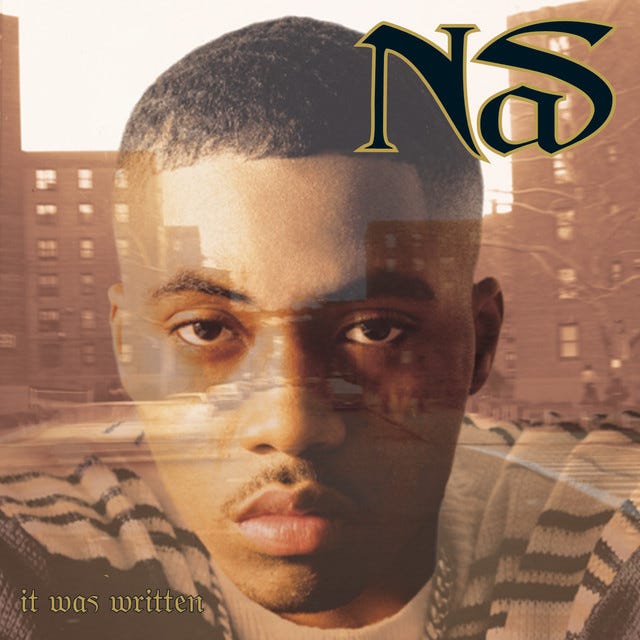
It Was Written turned thirty this week.
Nas’s second album.
The one the block never stopped playing.
I want to celebrate it.
I also have to tell you where I was standing when it dropped.
I had just landed a major role at Columbia Records and moved to the East Coast as a senior marketing executive in Black music.
Big money, big expense account, town cars waiting for me every night.
I had truly hit the big leagues.
The run that got me there was anything but glamorous.
I dropped out of UCLA my senior year, hustled at a couple of independent labels in LA, and then circled back to Columbia to work under Demmette Guidry, the same man I had interned for while I was still a student.
The former Sony Music intern was now in the building for real.
A Cali kid holding the responsibility of launching the most important East Coast album of the year, in the exact months the two coasts were trying to end each other.
I felt it in my body.
I flew back and forth to LA all year, and every trip the air got heavier.
Start with the stakes, because people forget them.
“Illmatic” gave Nas immortality.
It did not give him leverage.
It took a year for that album just to go gold.
He had made the most respected album nobody bought and the mission that summer was not to make pop records.
It was to make the greatest rapper alive impossible to ignore.
So Nas brought in Steve Stoute, a young manager with everything to prove, and Stoute brought in Trackmasters.
Nas said it himself.
Stoute was Cus D’Amato and he was Tyson.
This was not “Illmatic Part Two” and nobody in the room thought it was supposed to be.
Get bigger without getting smaller.
Change without disappearing.
Hardest move in music.
He made it.
I was grateful to be a part of the ride.
Every time I see the album covers, the promotional photos, the music videos I’m reliving my days and transition from LA to NYC in the mid 90’s.
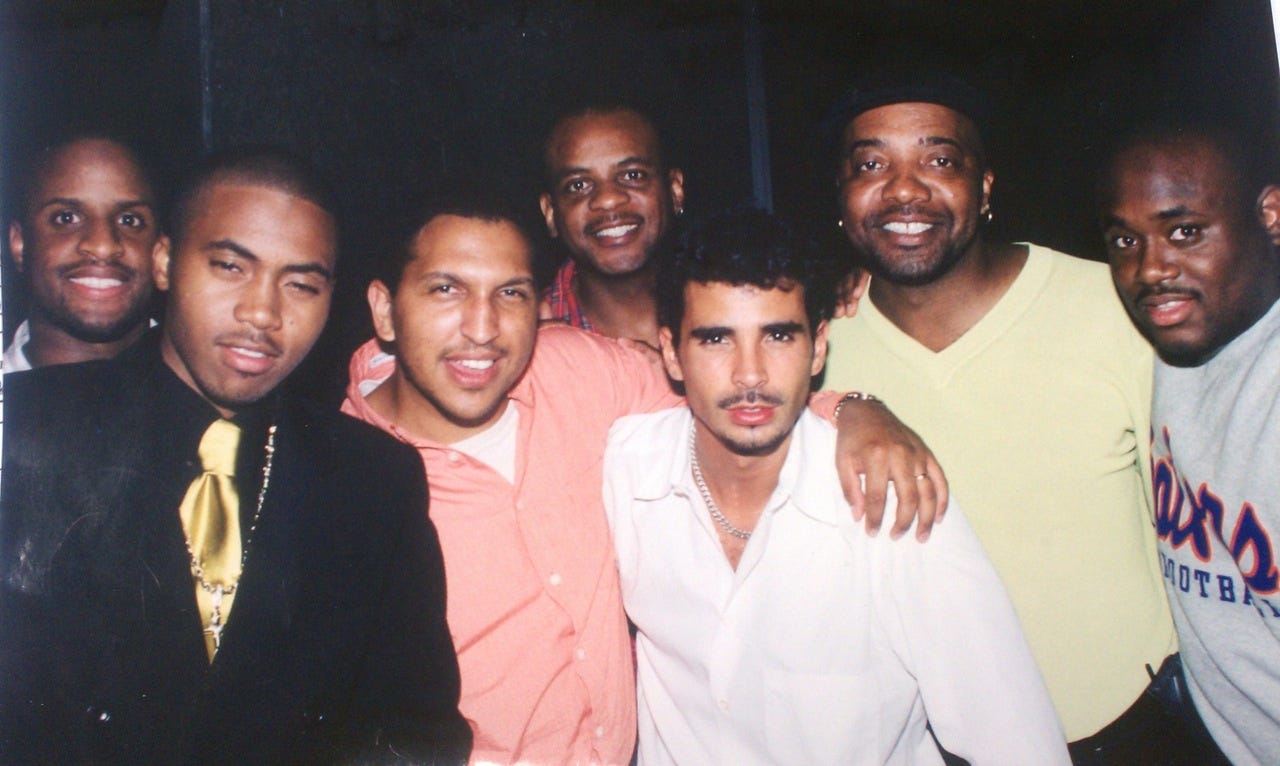
Recognizing the Dream
Tone & Poke, Trackmasters, were next to Puffy the most vilified producers of the era. They came up on Kool G Rap and Big Daddy Kane, then handed Biggie “Juicy” and Mary J. “Be Happy.”
Hip Hop purists said they were softening the culture.
Their thesis was that a big record could still be a great record, and history proved them right.
I loved the mafioso turn for a reason most people around me didn’t have.
My mother is Italian, born in Italy.
I am first generation Italian-Caribbean.
I grew up on those movies the way some kids grow up on scripture.
So when these brothers built a Black empire mythology on wax, I didn’t roll my eyes. I recognized it.
This was Nas Escobar now, not Nasty Nas.
The suits, the sheen, Lauryn on the hook.
The record landed a week after Jay-Z’s Reasonable Doubt, and suddenly the whole genre was in Italian suits, imagining empire fettuccine and lobster, the coded names, the whole mafioso dream on wax.
The men in the Street Dreams video looked like the guys I took meetings with at Columbia Records.
Restaurants with no name on the door.
“Yous guys.”
I had grown up around that world, spending time at Dionne Warwick’s house in the ’80s, learning how the business really worked in Vegas and beyond.
Call that my first “internship.”
Now here I was in the bottle-popping R&B ’90s, working Black music at Columbia the hottest label in the same building Fred Dannen wrote about in Hit Men.
Full circle in ways I couldn’t have scripted.
Hype Williams shot the video in Vegas as a straight homage to Casino, the same week Tupac was murdered in that same city.
And when Pac died, the building changed.
The jokes stopped.
The war stopped being a storyline and became a funeral.
The Nerve in the Songs
You hear the nerve in the songs.
On “The Message” he rode a Sting sample and opened with a line so cold Pac heard himself in it.
That season, everybody did.
On “I Gave You Power” he became the gun, telling the whole story from the weapon’s point of view, over a Premier beat.
On If “I Ruled the World” he pulled in a young Lauryn Hill and imagined a world he ran, and for four minutes you believed him.
On “Street Dreams” he made the hustler’s fantasy a pop record and refused to apologize for either half.
This was also where The Firm was born.
AZ, Foxy Brown, Cormega, Dr. Dre on the boards, an East Coast rapper reaching across a war to the West’s biggest producer.
Billed as a supergroup.
Looking back, closer to a prototype.
Rap as a corporation, before anyone called it that.
“The Message” samples “Halftime,” one of Nas’s earliest records.
Years before, as an intern, I worked the “Zebrahead” soundtrack, where “Halftime” lived.
My first brush with Nas became a piece of his biggest album.
The culture loops that way if you stay in it long enough.
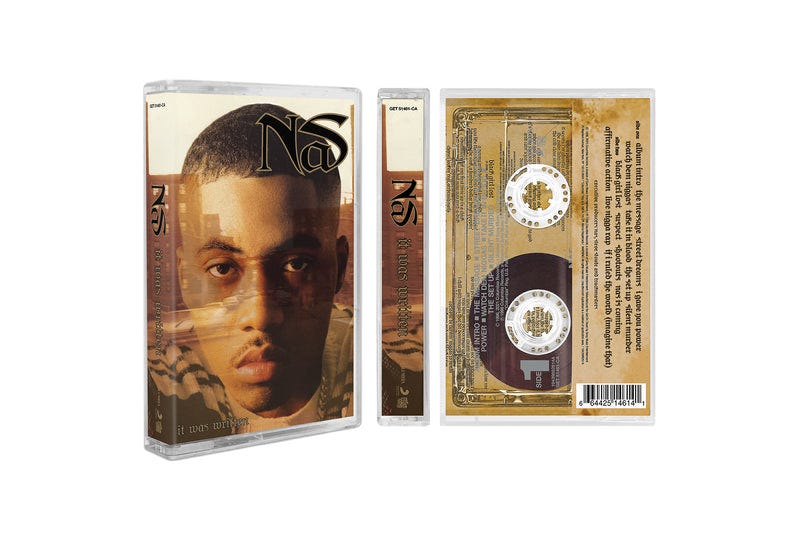
We had a good time making him unavoidable.
The album was called “It Was Written,” so we printed notebooks with the release date on the cover, and we faked New York City parking tickets with the date on the back.
Grown men found what looked like a ticket on the windshield and got a Nas release date instead.
Nobody calls that innovation now.
In 1996 it was.
Release week, we watched SoundScan like a heart monitor.
Around 270,000 in seven days.
Number one on the Billboard 200, and it sat there for a month.
The album nobody bought was suddenly the biggest record of his life.
Nas and I could not have been more different on paper.
Queensbridge and the West Coast.
But we found the places we lined up.
Queensbridge did not walk into a room loud.
It watched first.
Nas never carried himself like the biggest rapper alive.
Half the time he looked like he was still studying it.
Soft spoken.
Cinematic.
He saw his whole life like a film, which is why the records play like films.
I will not tell you the private things.
What I will say is that he used to tell me hip-hop would carry our culture into the future, and he said it like a fact, not a wish.
From Culture to Ownership
He was right, and then he proved it with his own money.
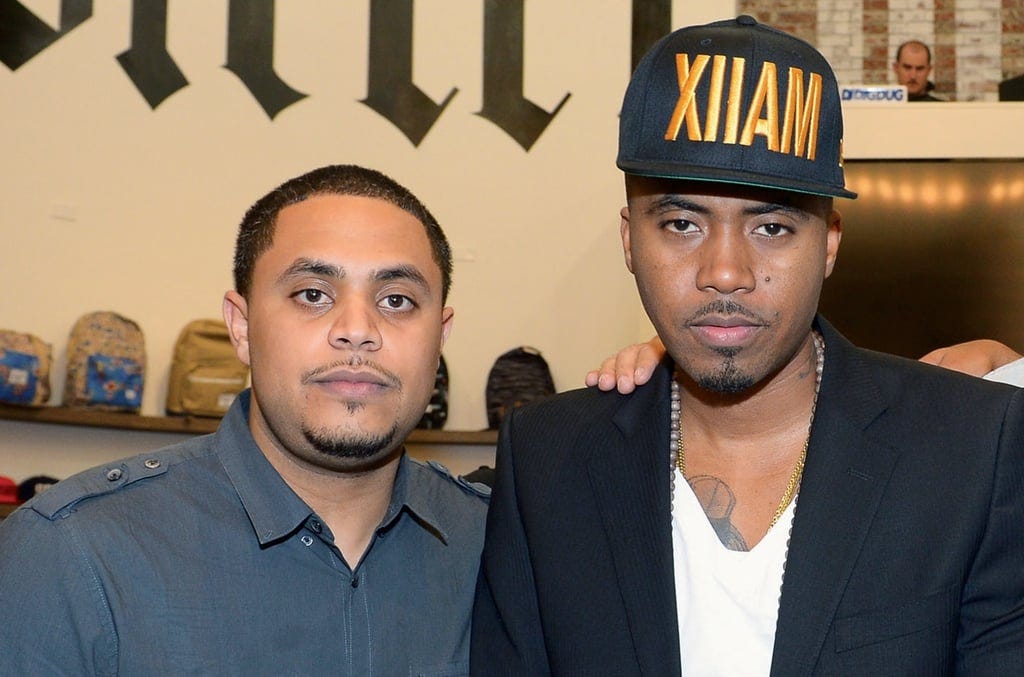
With his manager Anthony Saleh he built QueensBridge Venture Partners inside the Andreessen Horowitz orbit and got in early on Coinbase, on Ring, on Lyft. Anthony and I both came up through Troy Carter’s world, so I watched that arc from close range.
With Peter Bittenbender he brought back Mass Appeal, the media company and label, and made it a machine for keeping the music alive and moving it forward.
Nas said once that even as a kid he thought about the people behind the scenes, the ones who make things happen and build other people up. He became one of them, at scale.
The Firm was the first draft of that instinct, the instinct to own the thing and not just make it.
QueensBridge and Mass Appeal are the finished version.
This spring he took it home.
He is a partner in the casino resort rising on the Aqueduct site, hotel towers and a full restaurant row a few miles from the Queensbridge projects that raised him.
In April he rolled the dice at the ribbon cutting, then picked up a mic and performed If I Ruled the World.
Thirty years after he wrote it, he was still ruling rooms he built with his own hands.


Rooms I’ve Stood In
Years later I was advising the NBA Players Association, and my guy Que Gaskins and I had an idea.
Bring Nas to the Bahamas for the players’ midwinter meetings and sit him with the athletes to talk ownership, venture, building something that outlives the last contract.
We did it.
Chris Paul in the room.
Nas in the room.
The artist I once quarterbacked, teaching the men who run the league how to own instead of rent.
Full circle is not a phrase to me.
It is a thing I have stood inside.
"They're Playing Basketball, Without That Basketball"

“You never thought that hip-hop would take it this far” - The Notorious B.I.G.
Draw a line from that record through Jay and Biggie all the way to Drake and Kendrick. Every one of them found a way to own the radio without losing their own face.
Nas did not build that whole path by himself.
He built one of its clearest early stretches.
This is the part I could not have told you in 1996.
We thought we were shipping CDs.
We were shipping intellectual property, building assets that would outlive the format, the label, and most of the careers in that building.
It took me thirty years and a life in tech to name it.
The Address Outlives the Label
That building still has stories in it.
We used to take meetings at the Sony Club, an executive dining room on the thirty fifth floor, back when Sony Music ran the whole tower at 550 Madison.
Sony is gone from that address now.
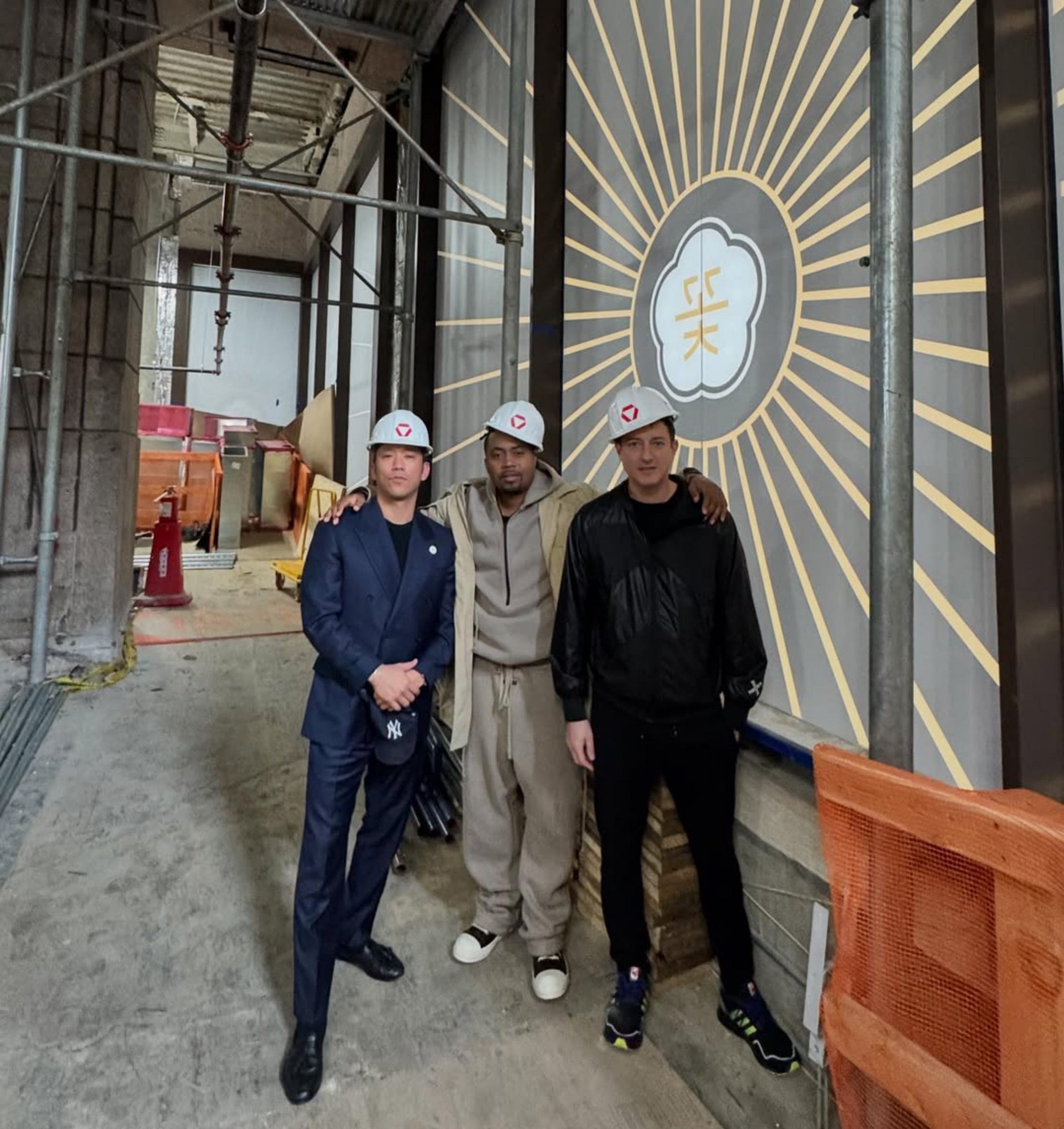
This spring Simon Kim opened Cote and a bar called Chimera in that same building, and Nas is his partner in it.
He narrated the opening announcement and gave the welcome toast the night it opened, in the building where we once made a record together.
The address outlives the label.
So yes.
The plaque says Nas, and it should.
It Was Written is his masterpiece.
But a record is a room, and I got to live in that one.
I am not here to count who the business forgot.
I am here to tell you the summer was real, the work was joyful, and the bond outlasted the paperwork.
That is the receipt that matters.
When I see Nas now, all these years and all these lives later, it is love.
Every. Single. Time.
If you know Nas, you know me.
If you know me, you know I was in the room.
Some things you do not have to prove.
You just had to have been there.
Phenomenal write up. The business acumen that others get praised for is starting to be acknowledged. Those Ring and PillPack investments were very successful and I see why he’d rather not talk about these things. I do hope to get into that space sooner rather than later.